Kalle Karlsson’s controlling Hammarby

Kalle Karlsson was born in Sri Lanka and adopted by a Swedish family as a one year old. He was a professional footballer who retired at 18 and began to write tactical articles while coaching his local team. He rose to prominence as a tactical writer at Sweden’s biggest newspaper, Aftonbladet as well as Expressen as this led to him being hired by Karlsbergs as their Technical Director. He fulfilled the role of Technical Director and Head Coach at Vasteras SK as well, getting them promoted to the Allsvenskan in 2024. Despite being a newly promoted side, they ranked second in expected goals, with a 49.09XG as his team underperformed their XG by an astounding number of 23, only scoring 26 goals. Their expected goals conceded number was 43.59 and they conceded 43 goals. They were 5th in PPDA as his team were relegated before he got them promoted again after one season. At Hammarby, he continued to produce an enchanting attacking side as his team led the league in XG and most attacking metrics.
Build-up
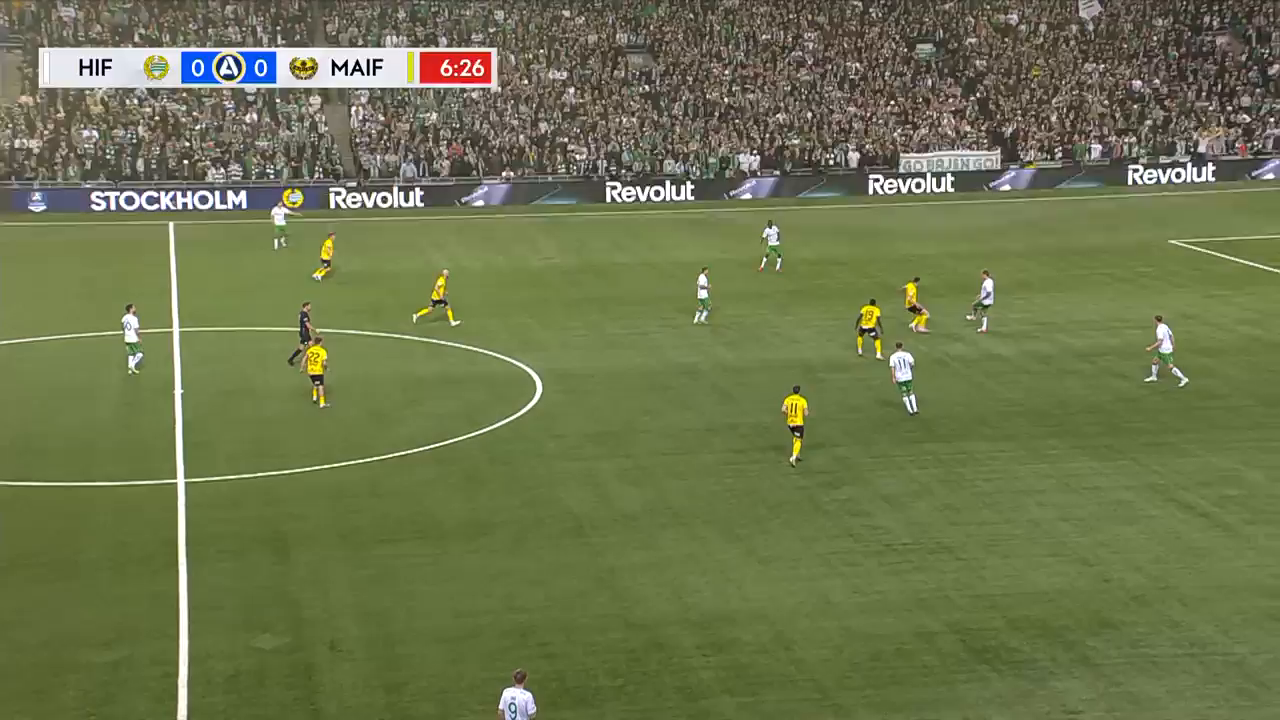
Karlsson’s side build-up in a 3+2/2+3 shape as if the goalkeeper has possession, the three chain will spread out and drop deeper into the box with the two midfielders moving closer to the defensive line. At this point, Hammarby will attract pressure to play a direct pass to the midfielder to turn and drive the ball. In a 3+2, a fullback will stay deeper, closer to the centre-backs which as Hammarby will look to circulate possession amongst the three-chain to attract pressure and play the ball into the midfield double-pivot. Once the ball is played into the midfield double pivot, the duo will work a connection and movement sequence to evade pressure playing the ball to the 10 space or the 9 dropping deeper. In other situations, the midfielder will drive the ball to play a through ball for the 9 making a run in behind.
In the picture above, you can see Hammarby building up in their 3+2 shape, circulating possession as they have created a passing angle in the double pivot while the 10 has dropped deep to receive possession in between the lines. The wingers are occupying deeper positions as if a pass is played to them, a fullback will make an overlapping run to allow them to cut inside or an underlapping run to create space for a pass to the 10 who will play the ball the ball-far 8 who will switch a pass to the far side. In the case of Montader Madjed, the fullback will overlap to allow him to create 1v1s situations to cut inside as he is their most effective attacking player.
In midfield, Karlsson’s side utilize triangular rotations as if the ball is shifted to the wide areas, the fullback will make a movement to the half-space, clearing a passing lane for the ball-near 8 to receive possession, working one or two touch passing connections as the ball-far 8 will move into a pocket of space, receiving possession to lay-off before they switch the ball to the flank. Hammarby frequently utilize wide build-up routines so they can switch possession to the opposite flank, normally from right to left so they can generate shooting opportunities for Victor Lind on the weakside.
Hammarby are very fluid in the ways which they use their fullbacks, they can drop into the three-chain as wide centre-backs, Karlsson can also have the ball-far fullbacks tuck inside into the double pivot. They have even worked build-up routines where they attract the press on one side, the ball-near 8 moving towards the flank and pushing the ball-far 8 into the 9 space or 10 space which leaves the ball-far 8 space vacated. They will shift the ball-far fullback into the 8 space to evade pressure in a way like Rodrigo Acosta’s Lanus Reserva. They will use the fullbacks in the half-space to add to the team’s transition, receiving possession in triangular routines on the flank or dropping deep to receive possession. When the fullbacks are in the three-chain, the wingers must drop deep to receive possession and connect, holding possession and playing a pass into the center. They will also work one-two combinations with the winger and fullback to play the pass into the channels to create crossing situations in transition.
The movement in the attacking line is also very intriguing as Karlsson normally operates with shorter and more diminutive strikers as at times, he will have the 10 move into the attacking line, allowing the striker to drop in between the lines or move to the wide areas to receive possession. Earlier in the season, it was very frequent that Hammarby would evacuate the 9 space completely with the 9 dropping into the wide areas to combine and the 10 dropping to receive possession in between the lines.
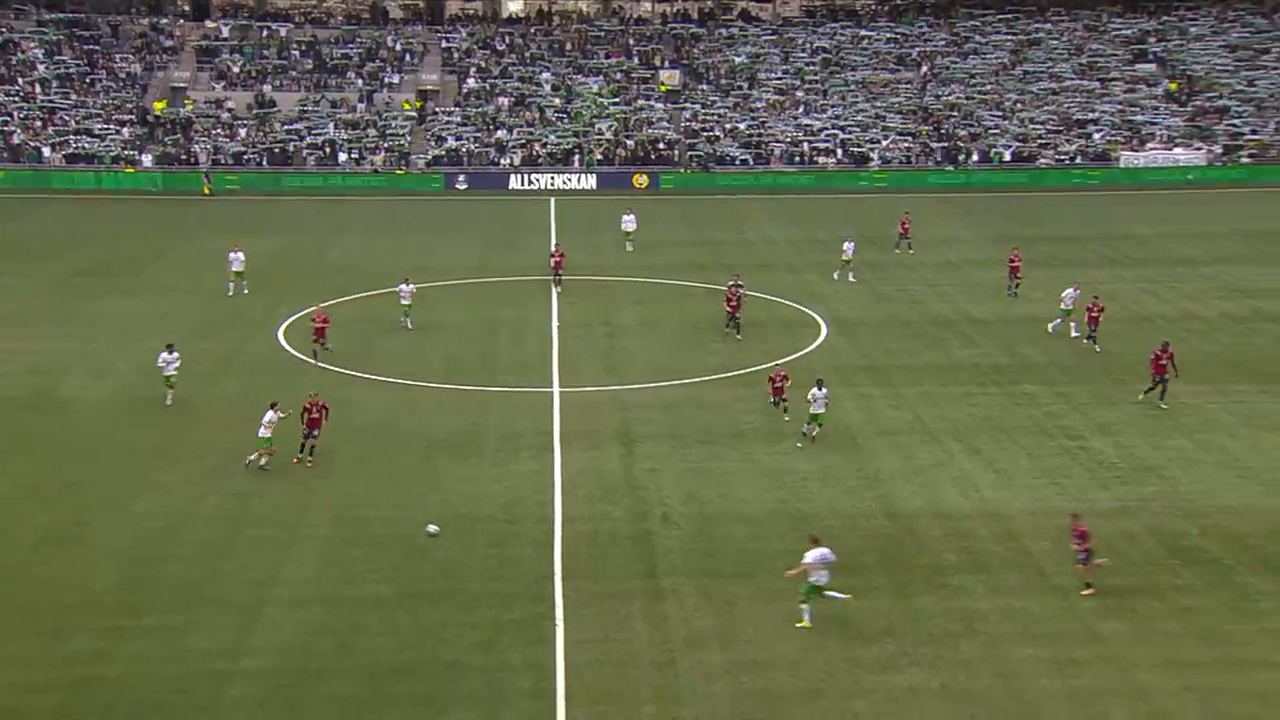
At times when building up, Hammarby will rotate the wide centre-backs like in the picture above as the ball-near fullback and 8 will interchange in the position with the 10 also dropping deep to create triangular movement. In the situation, the fullback will drop into the three-chain to receive possession, pushing the ball forward and playing a pass into the midfielder, vacating the space and pushing into the half-space, the ball-near 8 will drop deep to receive possession and move into the three-chain, leading to the 10 dropping deep as you can see how they have a triangular wheel like rotation on the ball near side. On the far side, you can see the ball-far 8 beginning to tuck into the 8 space to receive possession.
Positional Play
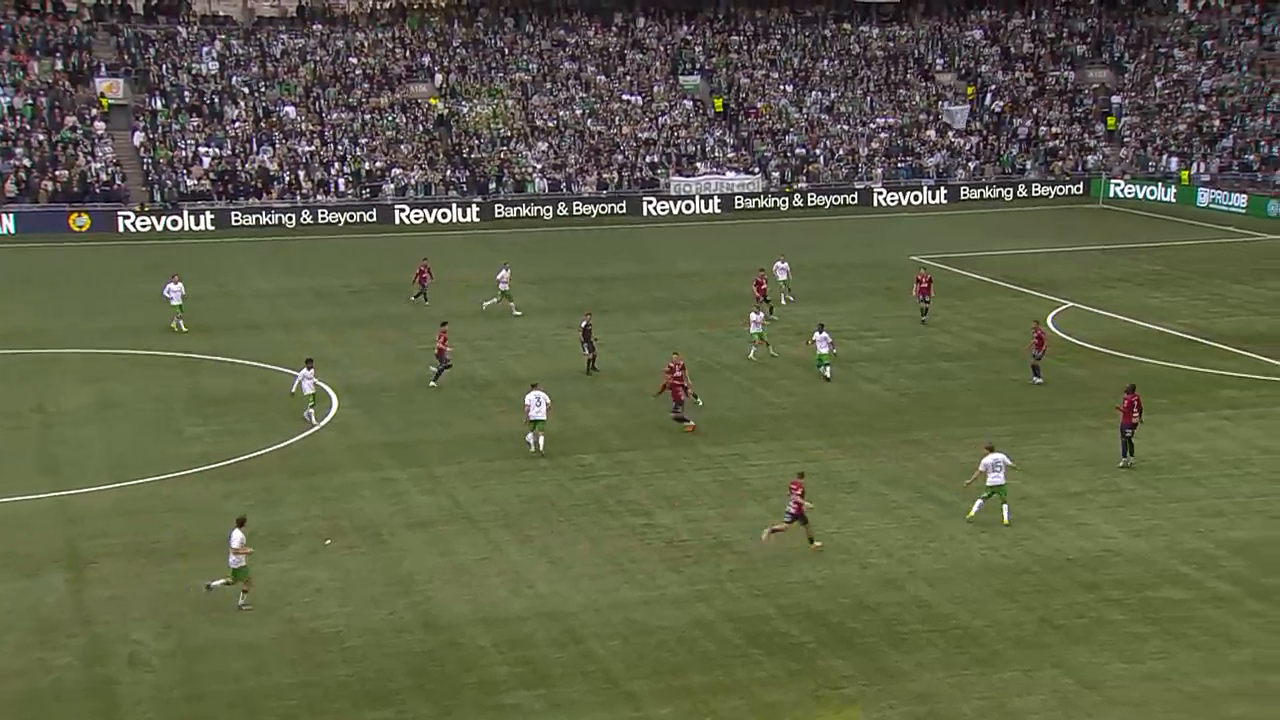
Hammarby stretch the pitch but they also utilize triangles to move possession, with one or two touch connections, quick one-twos in between the lines and runs off the ball. They can also squeeze the centre to play in between the lines as both fullbacks will take up inverted positions in the half-spaces while also being able to make late timed runs around the winger. They will also utilize movement and interchange in the nine-space to create pockets for crosses or direct diagonal passes from the wide areas and half-spaces.
In the picture above, you can see that Hammarby have triangular player spacing, numerical superiority in between the lines while both of their fullbacks are occupying inverted positions in the half-space. The player in possession can play a pass in between the lines for two attackers to play a one-two while the fullback makes an overlapping run to receive possession and play a low cross into the box. As we covered in the build-up phase, if the ball is played to Madjed on the right flank, the fullback will make a run to overlap allowing him to cut inside and generate a shooting opportunity.
Karlsson’s sides are well-versed in crossing zones as they will work situations where they will play passes into the channels for low crosses into the box or they will play the ball into a pocket in the half-space for high crosses into the box. The low crosses from near the by-line will go to the near post or to the top of the box while the deliveries from the half-space will go to the back-post or central area of the box. With shorter strikers, they are especially effective and more reliant on the low crosses and cut backs as they bring a taller striker off the bench in the second half. In the situation, you see the striker dropping deep to evacuate the as if the ball goes into the wide areas, the duo will interchange positions with the ball-far run making a run to the near post while the ball near one occupies the top of the box to disorient the opposition defence.
Vacating the nine-space can be an issue in some circumstances as their approach play can look labored without a presence in the nine-space, focusing on short passes in the intermediate areas while not having a presence in the nine-space to play direct passes into. Hammarby’s striker’s also make runs in behind and will work combinations and runs as Karlsson is skilled in generating shooting opportunities for his strikers in the width of goal, in the box as well as in wider areas of the box. The wingers tend to hold their positions and rarely make vertical runs to occupy the nine space.
To generate low crossing situations, Hammarby will play delicate passes to runners in the half-space to create low crossing opportunities, Karlsson will also encourage strikers to make deep runs as the player occupying the 10 space will make runs into nine-space to receive the cut-backs. Hammarby can shift the ball from side to is the approach play phase with short passing interchanges as the inverted fullbacks will tuck into the half-space to receive possession and play passes to the wingers making vertical runs into the channels to cut-back a low cross into the box.
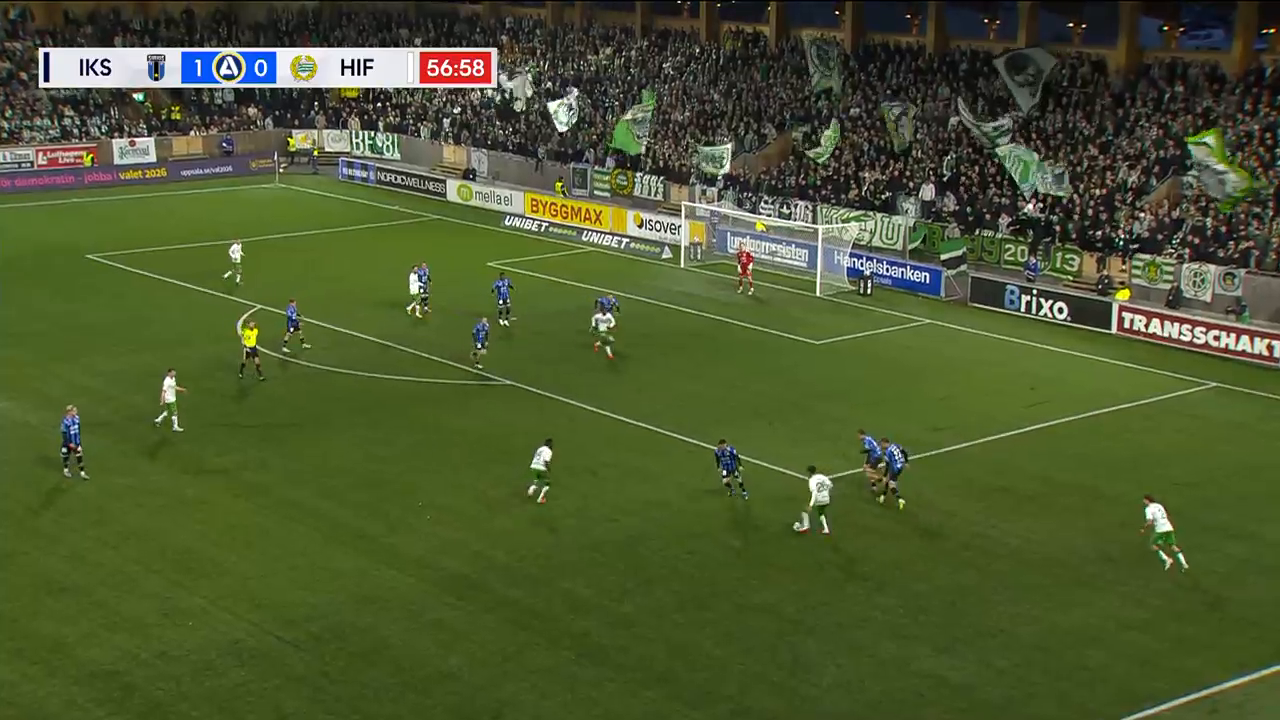
Wide combinations are also essential in the way that create opportunities from crossing situations as there is a minor relationism aspect to the way in which they commit bodies into the wide areas. There are triangular movements and passing sequences in the way in which they move and circulate the ball to create low crossing and shooting opportunities. Karlsson prefers a more mobile striker as this allows them to move out of the nine-space to receive possession and lay-off to drag markers out of position and generate shooting opportunities.
In the picture above, you can see Hammarby are in a triangle in the wide areas as the fullback has overlapped Madjed who has cut inside, triggering a run into the half-space from the ball-near 8 while the striker is moving to the wide areas to receive possession. In this sequence, the winger can thread a through ball to the winger making a run in the half-space to cut-back into the six-yard area as the striker has cleared the space for a run. He can also play a pass to the striker in the half-space to lay-off for a shot at goal or a cross. The winger can also make a standard pass into the wide areas for the fullback to cut-back into the cross for runners.
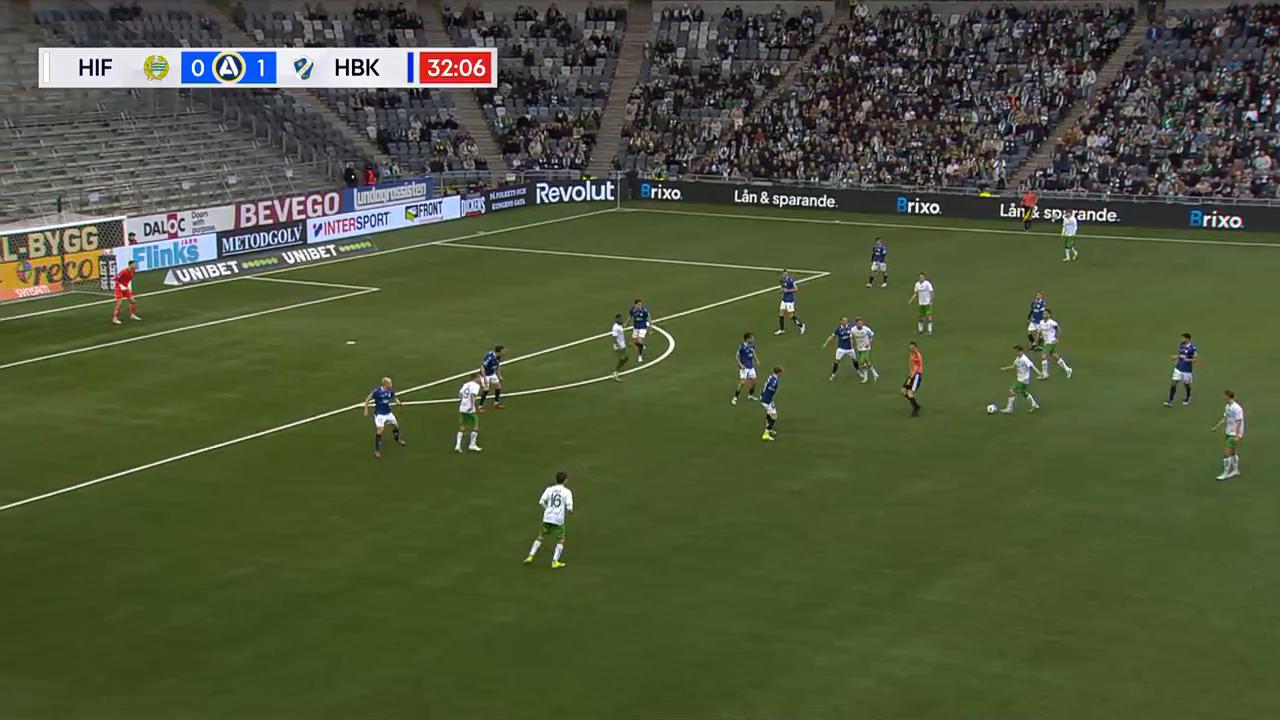
In some of Hammarby’s tougher games, they can find themselves in the situation above where they are operating in a narrow shape, looking for closer player spacing for combinations in between the lines and runs into the channels and central zones to create opportunities. Notice how the player spacing is triangular as Hammarby are looking for triangular player spacing while the left winger is tucked into the half-space as the left back is also tucked inside. If the ball is played into the left half-space, the left back will make a run to receive possession in the channel and cut-back a cross into the box.
In these situations, against the deeper blocks in the league, Hammarby can struggle to create attacking opportunities, circulating possession in front of the defensive block and moving play from side to side as they struggle to create penetration. I think that Karlsson can utilize the half-space drop, wide zone run technique that Roberto De Zerbi has utilized for Brighton. While circulating possession, the player in the half-space will drop to attract the marker, taking the attention of the defence while the player in the wide zone will make a deep run to receive possession to have a shot on goal. In this half-space drop, wide zone run technique, the deep run in the wide zone can also trigger a near post run from the striker for a cut-back as it is a direct movement that will allow Karlsson’s side to create penetration and generate shooting opportunities.
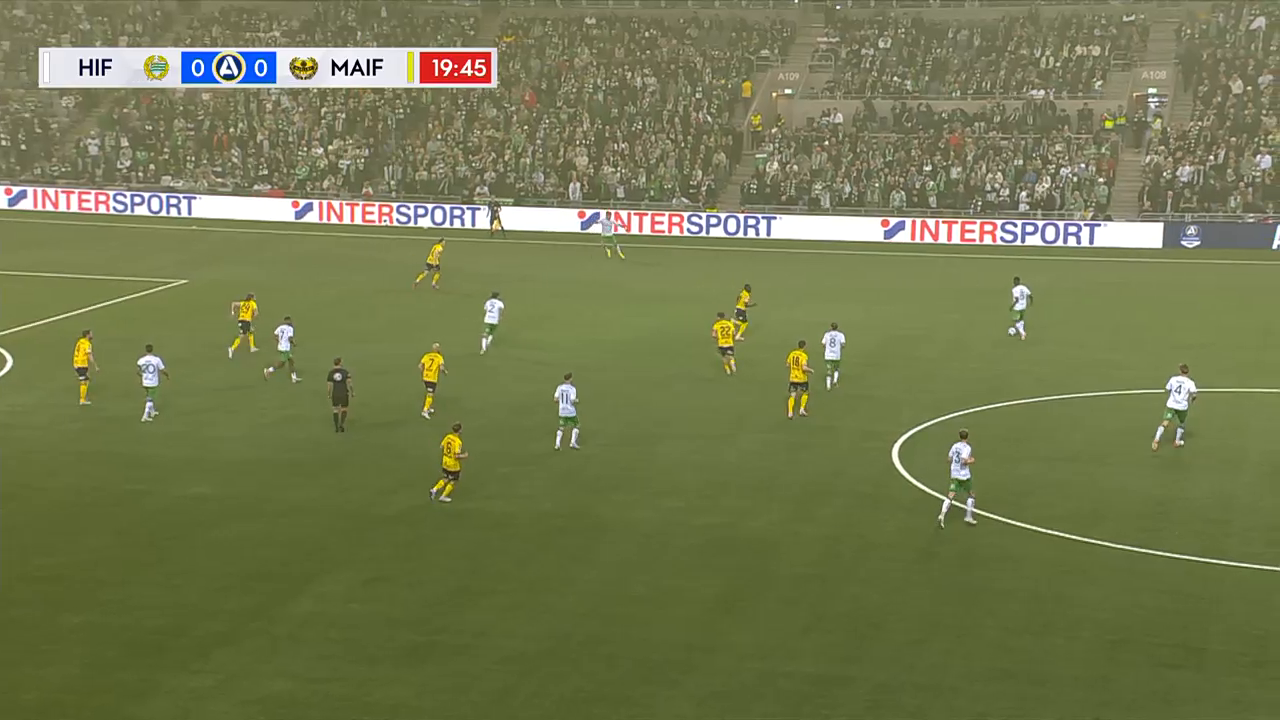
The above clip is from the opposite flank as the right-back is occupying the half-space while the winger is in the wide zone, Hammarby have circulated possession to the weak side where they have a special advantage on the flank. Madjed is a winger that prefers the ball to feet as when they play into this situation, he will drop deep to receive possession. The fullback in the half-space can drop and Madjed can make a run into space to receive possession and play a low cross into the box for a near post run from the striker. Madjed can also make a more direct outside-in run to receive a pass in the half-space zone to cross into the box.
This season, Hammarby have utilized half-space drop, wide zone run routines in buildup to play direct passes into the channels but they can also use it with more intention in the final third to get penetration against deep blocks and create opportunities. There have been some games where Hammarby have had control and lost or drawn the game due to not being able to find penetration in these moments as this is a tool that could be able to help them.
Counter-Pressing
In the counter-pressing phase, the player who loses possession is tasked with directly engaging the opposition player on the ball or at least halting a counter-attacking move to allow teammates to move into the zone and apply a standard man-orientated press. This especially happens when possession is lost in the wide areas while if possession is lost in the opposition box, the attackers are tasked with recovering to win possession while defenders push up to compress the space. Hammarby can transition from the pressing phase to counter-pressing phase quite seamlessly as the player spacing in the attacking phase is very tight meaning once possession is lost, the player who loses possession can apply direct pressure on the ball while his teammates can shift into the area to compress space, man-mark and force a turnover. On a counterattack for the opposition, players are encouraged to rush back and cover space while other teammates recover so the right-back will cover the centre-back zone if need be.
Pressing
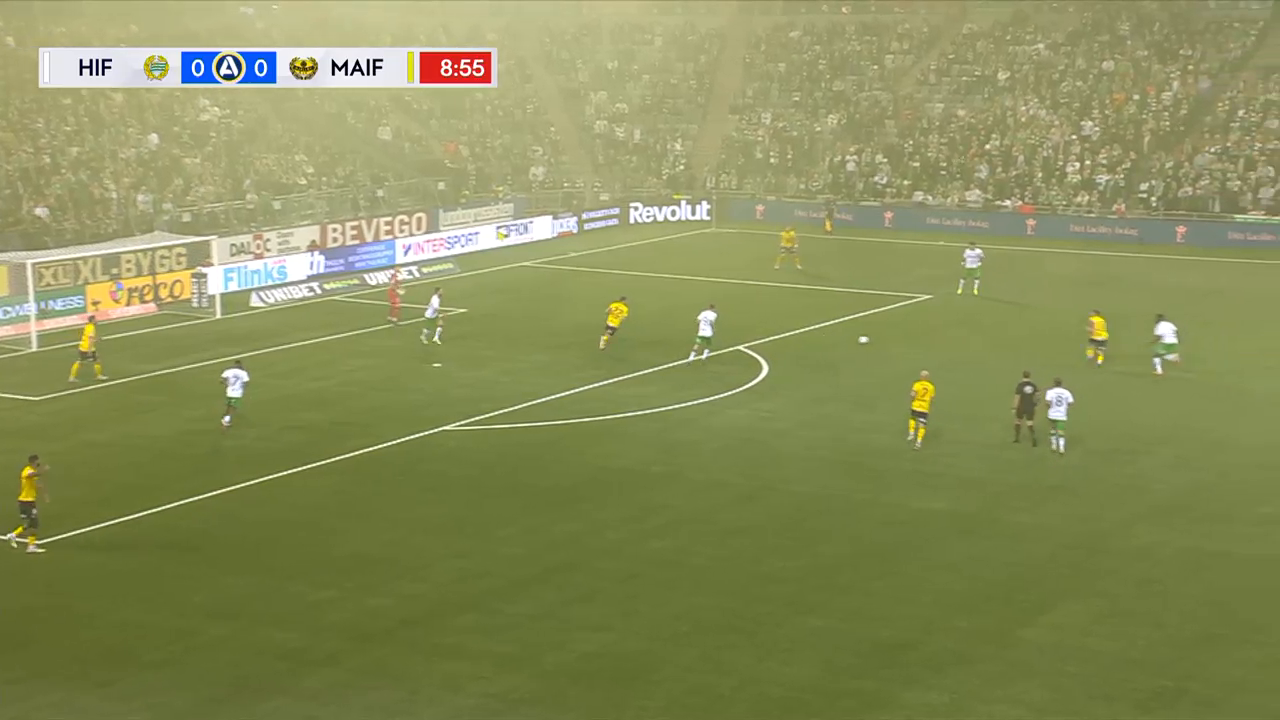
Hammarby press high and aggressively in a man-orientated fashion across the pitch as they look to win high turnovers far away from their goal so they can establish quick attacking moves. After turnovers, defenders are encouraged to play quick one-touch passes through the central lines to recycle possession so Karlsson’s side can launch quick attacking transitions. Their defenders push high and track their markers deep into the attacking half.
In the above photo, you can see that Hammarby have pushed high to apply pressure on the opposition directly from an opposition goal-kick, all the opposition players are marked, except the ball-far fullback. If the ball is moved to that side, then the ball-near fullback will push high to apply pressure. Karlsson’s sides are aggressive about pressing the goalkeeper as if the ball is played back to the opposition goalkeeper, the striker will make a curved run to deny the goalkeeper passing access to his centre-back to force a straight ball in between the lines or a long ball that Hammarby’s highly positioned centre-backs can recover. When the fullbacks push up high to engage in the pressing phase, the centre-backs are tasked with covering balls into the channels as Karlsson tasks his centre-backs with defending large spaces in isolation in the pressing phase.
One of the more intriguing things about the Hammarby press is the way that they cover for each other to counteract opposition movement as if the opposition interchange positions, the pressing players will change positions and cover to force the turnover. In tight spaces like the wide areas, players will slide across to cover to win an interception as this allows them to be more effective in their man-marking. In the defence, their left-sided centre-back will push high to track his marker as his partner will cover. The ball-near centre-back will slide across to cover for their fullback with passes into the channel while if the centre-back pushes up and the opposition manage to break, the deeper-lying midfielder will provide cover in these situations.
Defensive Shape
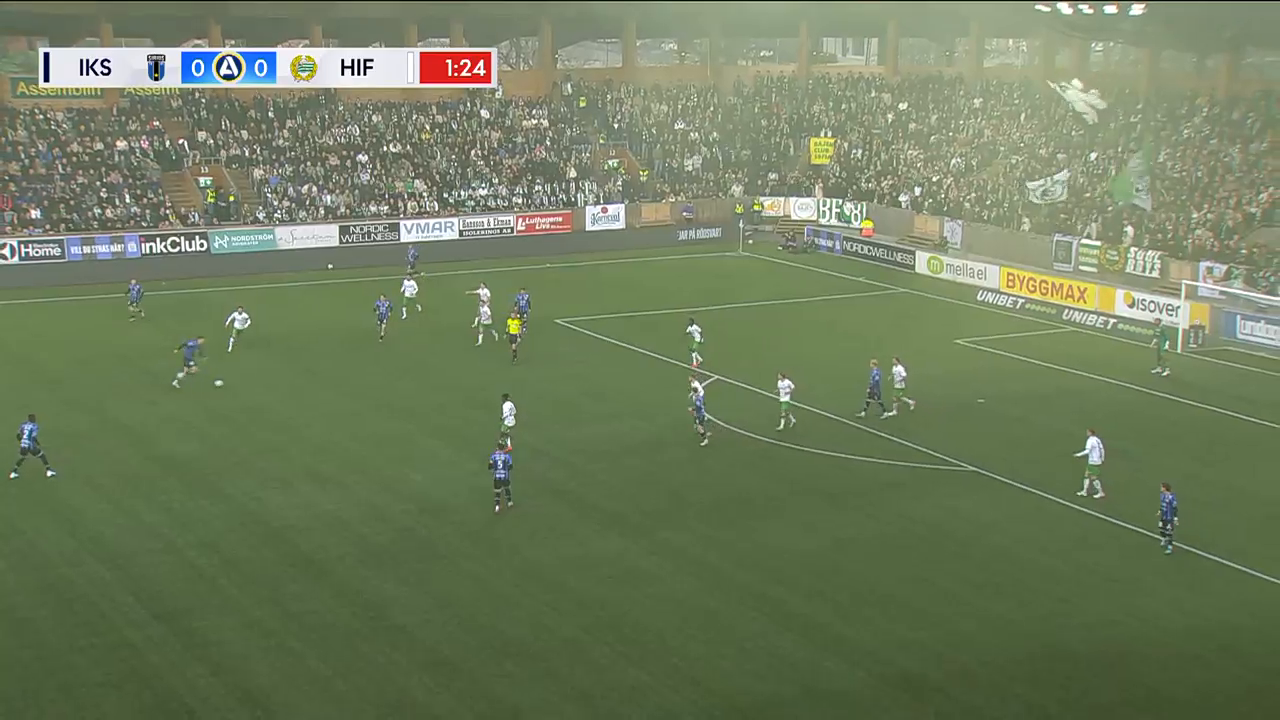
The interesting thing is that Hammarby dropped into a zonal defensive block with man-orientated responsibilities as a key facet of their defensive block was constant pressure on the ball to force immediate turnovers or force the opposition into back-passes. In the wide areas, they would utilize three to four men, be it the ball-near fullback, deep-lying midfielder, winger and centre-back to apply direct pressure on the ball in the wide areas and shut down crosses into the box. In the phot above, you can see that Hammarby have shifted men into the wide areas to apply pressure on the ball and force a back-pass. This is different from most modern teams in European football as it is almost a basketball style of defending.
Another interesting aspect of Karlsson’s defensive style is the man-marking in the defensive block as players will switch positions and track markers in the medium block as they don’t look to sit in a zonal shape and close space in between the lines. This adds to the increased pressure on the ball as in the picture above, you can see the opposition have moved the ball into the central spaces, which leads to the closest Hammarby defender pushing up to follow and apply pressure on the ball. Hammarby were so focused on defending the wide areas, they were willing to leave the centre open in some situations. In the medium block, centre-back would move out of position and push up while the ball near midfielder would drop to cover the space as this is how aggressive Hammarby were in tracking their markers.
Hammarby’s aggressive defensive block allowed them to force the opposition to play backwards so they could transition into their higher man-orientated press so that they could force turnovers and break. Karlsson’s side were a very good counter-attacking team as in turnover situations, they would break with three to four players, one in the centre and two closer in the wide areas as this allowed them as they could constantly make runs off the ball into open space to get into good goalscoring positions.
Conclusion
Kalle Karlsson leaves Hammarby after he only lost in the expected goals margin in three of his games in charge while being a close second to Sirius in the expected points table. There may have been issues behind the scenes, but he is still a young coach with considerable talent and upside as he has shown in his last two jobs. His teams can tend to give up big opportunities but that is offset by the high-level chances that they create for the striker as he is one of the more striker friendly coaches on the continent. He is still a young coach to watch as one could expect him to have more luck in his next job.