Carles Manso’s graceful FC Andorra
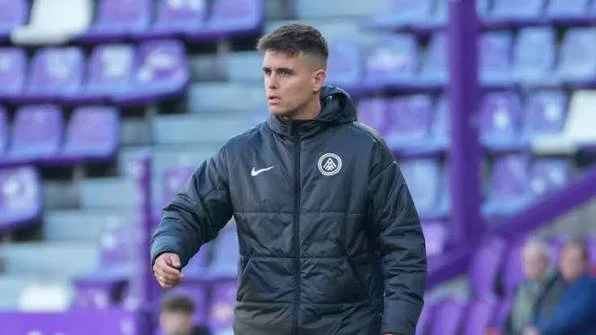
Carles Manso is just over a year into his first Head Coaching job, at the tender age of 33, with FC Andorra as he has shown immense potential as an up-and-coming manager in Spain. He plays a possession-based style on a shoestring budget while it is impressive that in the modern world of physicality in sport, his team is one of the smaller sides in European football. He preaches organization and fluidity in possession as well aggressive pressing and a high line, striving to maximize reward and limit risk. Last season, his team was ninth in expected goals and second in passes per defensive action in the Segunda Liga while this season, his team is first in expected goals and passes per defensive action.
Build-up
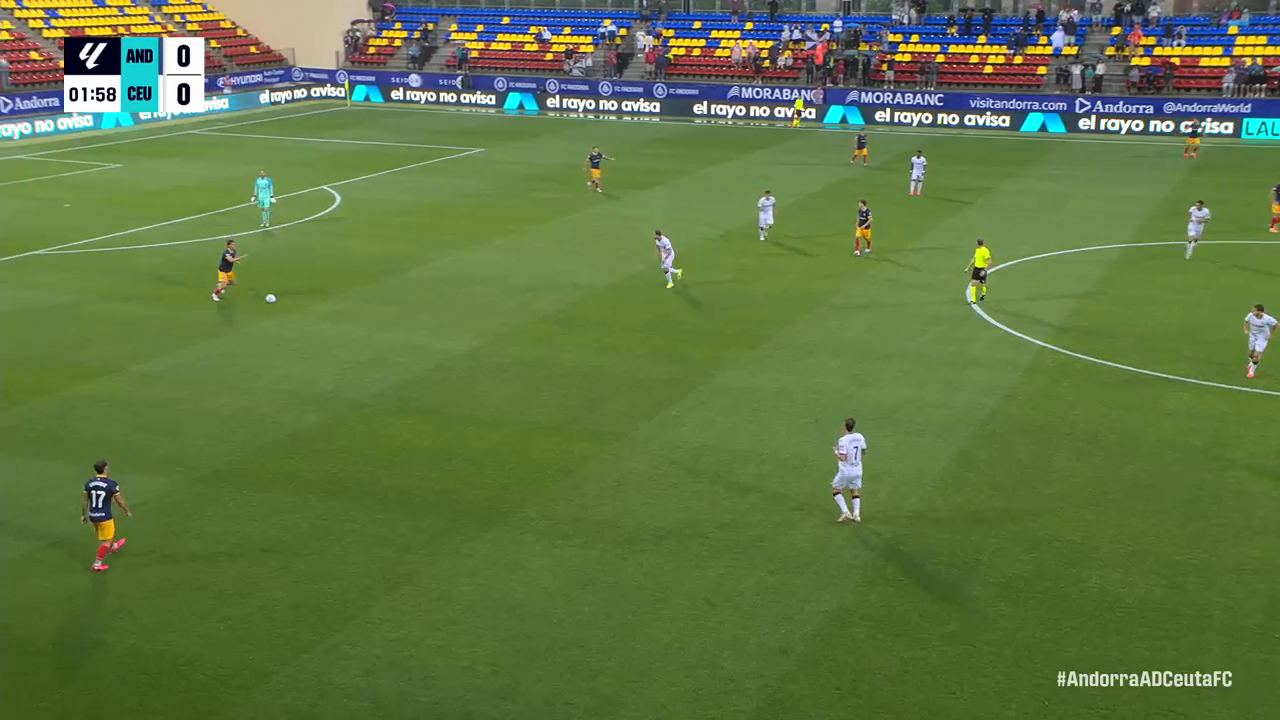
In the build-up phase, Andorra utilize triangles as they can operate in a 2+3 shape or a 4+2 shape as in the wide areas, they create a triangle with the fullback, ball-near 8 and the winger. The goalkeeper and fullbacks are highly involved in build-up and receiving possession while there will be rotations and fluidity in build-up. The goalkeeper is used an extra man to manipulate the opposition press while the midfielders will rotate with one midfielder pushing forward and the other dropping deep to receive possession behind the first line of pressure to turn and play the ball forward.
In the photo above, Andorra are in a 2+3 build-up shape but Manso structures it in such a way that the ball-far 8, is positioned higher up, almost as a 10 as a potential out-ball after his team work the ball out of pressure. One of the main aspects of this 2+3 build-up shape is the movement in the wide areas as if the centre-back is in possession of the ball, he will drive forward, the fullback, winger and ball-near midfielder will make a triangular movement to create space for a pass in between the lines or run into the channel. If the fullback receives possession, the winger and midfielder will switch positions, allowing the fullback to play the ball, move into an inverted position to work a connection to play the ball into the channels for the winger. Fullbacks occupying the central spaces are pivotal facet of Manso’s style in possession.
In their 2+3 build-up shape, when the centre-back would push forward to carry the ball, the ball-near midfielder would drop deeper, creating space for the fullback to move into the half-space, creating space to isolate the winger in the wide areas against the opposition fullback. However, the winger would also push into the nine-space, allowing the striker to drop deep and receive possession, allowing Andorra to work quick triangular pass and move combinations to generate shots. The movements in the third line would be to push a player forward while another player drops deep as even when they push the ball-far 8 into the higher areas, he will trade places with the striker to drop deep and receive possession in between the lines. This allows Andorra to occupy the opposition defence while freeing up players with movement in between the lines. In possession, Andorra will work a ploy where they will attract pressure for a deep pass to the 8 space while a winger or fullback will interchange in the striker, creating space for the 8 to pass into once he turns and drives the ball. Andorra will attract pressure and play direct passes into the 8 space while also working combinations between the deeper 8 and 6, to play the ball to the ball-far 8 to initiate transitional moments.
The 4+2 shape will be in a flatter shape as the fullbacks will occupy a higher position than the centre-backs as the ball will be circulated amongst the back-line while the double pivot interchange. When the ball goes into the wide areas, the ball-near midfielder will move into the half-space to receive possession while the ball-far midfielder will move into the six-space. The two midfielders will interchange as the objective is to create a free man in the six-space to receive possession to turn and play the ball forward. Manso’s side will maintain their triangular player spacing by dropping the striker into the 8 space or moving the winger into the 8 space with the fullback stretching the pitch. If the Andorra shift the ball across the back-line to the weak side, the fullback can move into the 8 space, creating a passing angle for the winger who will receive possession, play a one-two with the fullback and make a run into the channels to create a crossing situation.
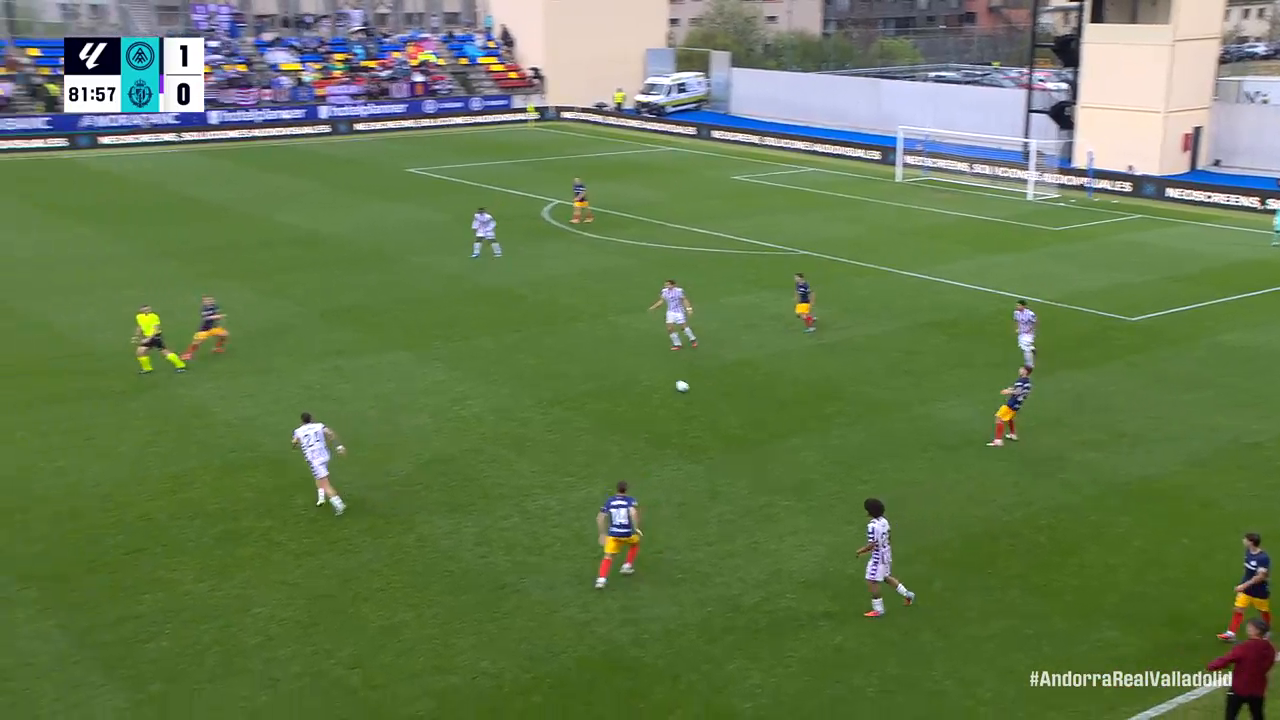
In build-up, Andorra will also overload one side to attract pressure, fostering quick passing interchanges in tight spaces. Manso also utilizes this idea to limit the effect of his right-footed left-sided centre-back as he will be able to play quick short passes rather than leaving him isolated, looking to play low percentage long passes. They also overload this side of the pitch to occupy the opposition’s attackers as this allows the right footed left-sided centre-back to drive forward with possession, attracting pressure to play a pass to the ball-far 8 or the free man to evade possession. You can see in the picture how the centre-back has driven the ball forward, teammates have dropped deep and he has played the ball to the ball-far 8.
The centre-back can also drive the ball forward while a midfielder drops into the centre-back zone to create a triangle and manipulate the opposition press. If the centre-back drives possession and gets close to the halfway line, the winger will make a movement into the half-space and the fullback will overlap. The fullback can also make a movement into the half-space to receive possession in between the lines to create space for the winger in the wide areas. Despite, Manso’s creative problem solving, the lack of a left-footed left sided centre-back greatly limits FC Andorra in possession as the centre-back will drive the ball forward to play a sideways passes or turnaround to play the ball backwards. Andorra have shown potential for quick passing interchanges on the left after attracting pressure.
Manso’s side will also utilize a wheel-movement with the wide triangle spinning a wheel sequence to create an open man with a run in behind, pass into the channel or pass into the half-space. They overload the left side to have close player spacing for a direct pass in between the lines for quick connections and pass in behind to create a breaking situation and generate an opportunity. Their overloading on the left side of their defence in build-up could also be a ploy to create space for the right-sided centre-back to receive possession and be able to drive the ball into the midfield line to evade the first line of pressure and find a direct pass in between the lines.
Andorra will deploy a 3+2/3+1 to attract pressure, gain numerical superiority against the opposition press. Their three-chain could be a central midfielder dropping in between the centre-backs or a fullback staying deep as the midfield double-pivot will rotate to create space for passes into the midfield line. When the ball is played wider, the ball-near 6 will shift into the half-space, allowing the ball-far 6 to move into the six-space or he will push up and allow the 10 to drop into the six-space to receive possession. The ball-far 6 could also push up and allow the ball-far fullback to tuck inside. When Manso’s side are utilizing their three-chain, midfield rotation is integral to evading the press and opening passing lanes into the midfield line.
The movement and rotations between the wide centre-back are particularly interesting as the midfielder will drop into the three-chain, allowing the centre-back to take up an inverted position in the midfield line. This allows to Andorra to create an overload in the ball-near zone, creating issues in the opposition midfield block as the inverted fullback will take up a marker and allow the team to create space for a deep pass in between the lines. At times, Andorra will shift the fullback into the half-space, allowing the 10 to drop deep while the winger will stay wide for a direct pass into the channels to create a low crossing opportunity. They can utilize a similar movement to create an angle for a deep pass into the fullback or the striker who will be occupying the 10 space to receive possession in between the lines and work a triangular passing routine.
Positional Play
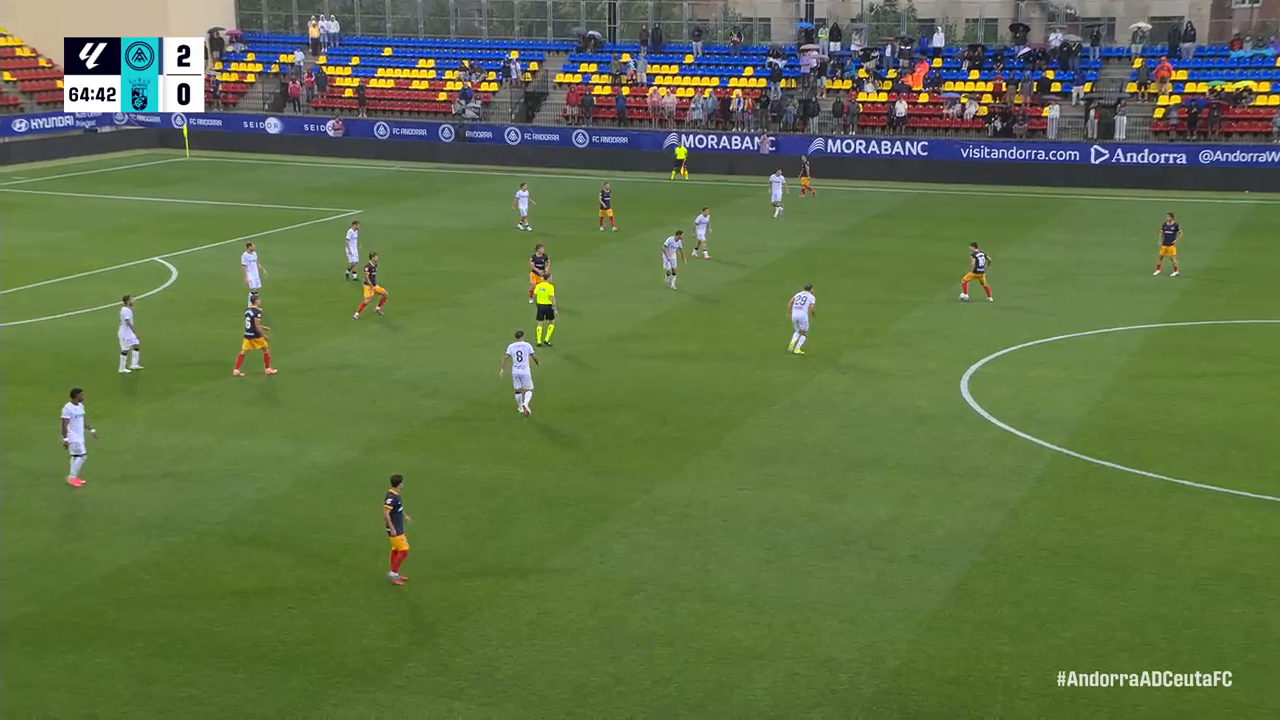
Manso is really good at educating his players on movement, runs off the ball and blind-sided movement in between the lines as his team utilize triangles, one-touch high tempo passing interchanges and spreading the field. They utilize triangles in the nine-space to drag opposition defenders out of position and create opportunities while they stretch the pitch with their fullbacks and wingers. The young coach also educates his wingers on movement and runs into space well as he will allow his wingers interchange with the striker, make runs into the centre of the pitch and isolate them against opposition fullbacks in 1v1 situations.
In the picture above, you can see that Manso’s side have a triangle in the centre while they have men in between the lines. You can see the man tucked in just below the striker, shifting into a more central position while the striker will move into the vacated area. Andorra are utilizing these blind-sided movements to play passes in between the lines as the attacker making the first movement will drag his marker out of position, allowing the nine to move into the open pocket of space, receive possession, lay-off which will trigger a third man run in behind from the ball-far player. In these sequences, with their triangular passing connections, Manso’s side will utilize one-touch to move the ball quickly into open space.
Manso’s side will circulate possession in a 2-3-5 but there will be consistent movement off the ball to open up space, allow players to drop into pockets and to circulate the ball with quick short passing interchanges or direct vertical passes in between the lines. When they circulate possession in between the lines, the winger will tuck into the nine-space, allowing the fullbacks but there will be interchanges where the fullback will receive possession, play the ball to the central midfielder in the half-space, with the winger moving into the wide zone. Andorra are really good at having a player drop into space with an attacker running behind, creating a passing option for the player in possession as well as a deep run to stretch the defence. In the wide zone, if the winger is tucked into the centre, he will drop into the half-space, allowing the midfielder to push forward.
In their 2-3-5 attacking shape, Andorra are fluid in the way they use their fullbacks and wingers as their fullbacks are tasked with making movements into the central positions to take up ‘inverted’ situations while can also stretch the pitch. They will move into the half-space to allow strikers to drop deep, while in the attacking phase, they can receive passes in between the lines to work one-twos with the wingers to play the ball into the channel for the winger to have high-quality crossing situations. One-twos in the final third between fullbacks and wingers are a staple of how Andorra transition. They can also move into the half-space to receive early passes into the channels to play low crossing situations while they participate in the central triangular movements as you can even see fullbacks making runs into the nine-space. They will occupy the wide areas, allowing the wingers to tuck into the central spaces as wingers being able to receive and connect in between the lines is integral to Manso’s style. Wingers tucking in allows them to make runs into the nine-space when the striker drops deep.
Manso is very good at coaching and developing wingers due to the freedom he gives them to move into the central spaces, receive possession while also utilizing a style where there is fluidity in the nine-space. He also utilizes outside-in runs, allowing the wingers to hang on the outside of their fullback before making runs towards the central spaces to have opportunities to have high-quality shots and crossing opportunities. Wingers are also allowed to make movements into the box to meet crosses. In certain situations, the winger will attack the box in the nine-space, making runs to the near post as Manso’s system consistently puts wingers in good shooting situations.
Andorra will utilize a 3-1-6 with tight player spacing to create triangles across the pitch, especially, shifting players to the wide zone to create space for a direct pass into the channel for a runner and a low cross into the box. Manso’s side will normally attack the box with three players, a striker, an attacking midfielder and the ball-far winger and fullback. Andorra create low crossing situations for near post runs for the striker as a 3-1-6 shape allows them to interchange positions, create space in between the lines and allow teammates to make runs into the box. They can work situations where they drop two midfielders, either side of the deepest-lying midfielder to attract pressure and create a direct vertical pass to the 10 or nine-space for a triangular passing situation in this area.
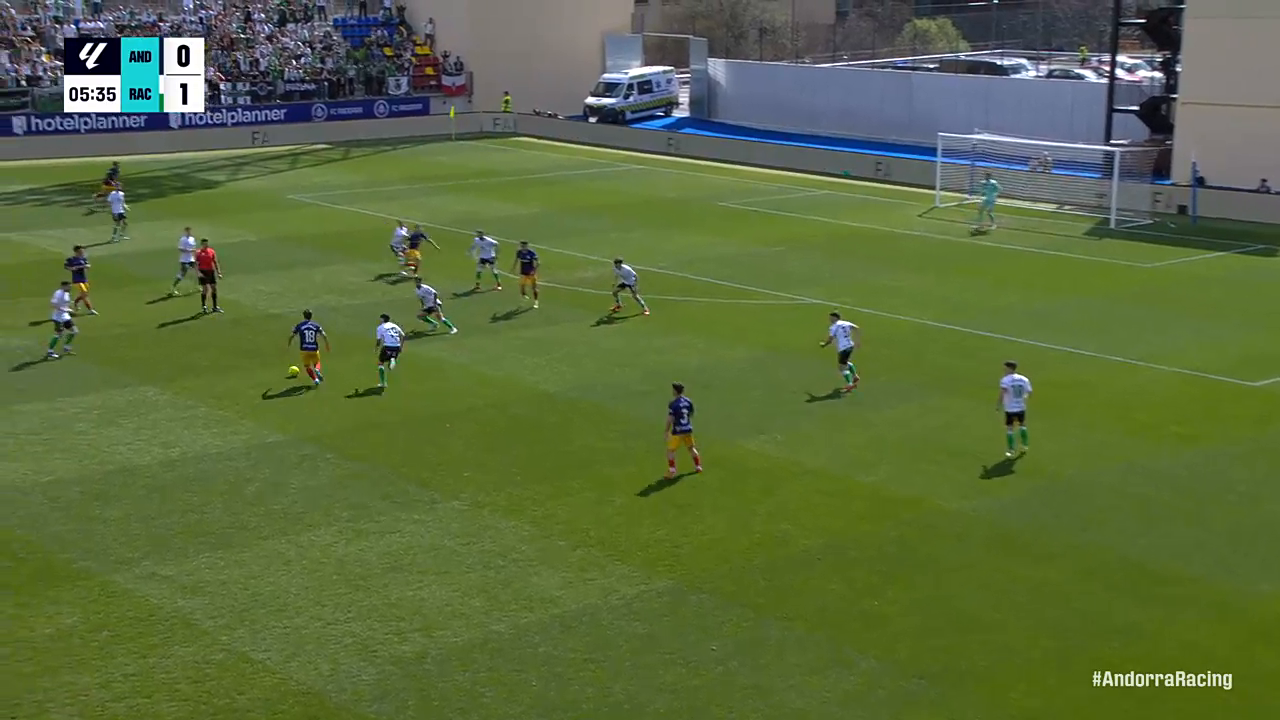
In the picture above, you can see how Andorra make runs off the ball as the 10 receives possession, the player in the nine-space holds his position, the player makes a run into the width of goal which also clears space for a pass into the channels. In this situation, the player works a pass into the wide zone for the runner to have a low crossing opportunity. Andorra usually utilizes half-space movement for wide zone runs to create crossing opportunities. They also have half-space drops for wide zone runs as the player occupying the half-space will drop, allowing his teammate in the wide zone to make a run into the channels to receive an early pass to play a cross into the box.
Manso’s side have a mastery of clearing space with players moving to occupy space in the final third, constantly looking to drag the opposition defenders out of position with movement, one-touch passing and deep runs. As good as the young Spanish coach is in teaching winger movement, he has also shown potential for developing strikers and teaching striker movement. He creates low crossing situations for strikers to make runs to the near post, especially with rotations in the wide zone, passes into the channels while he also creates high-quality opportunities for strikers with passes from the half-space. With the triangular passing situations, they create situations for high quality shots within the width of goal as they walk the ball into the net in some situations.
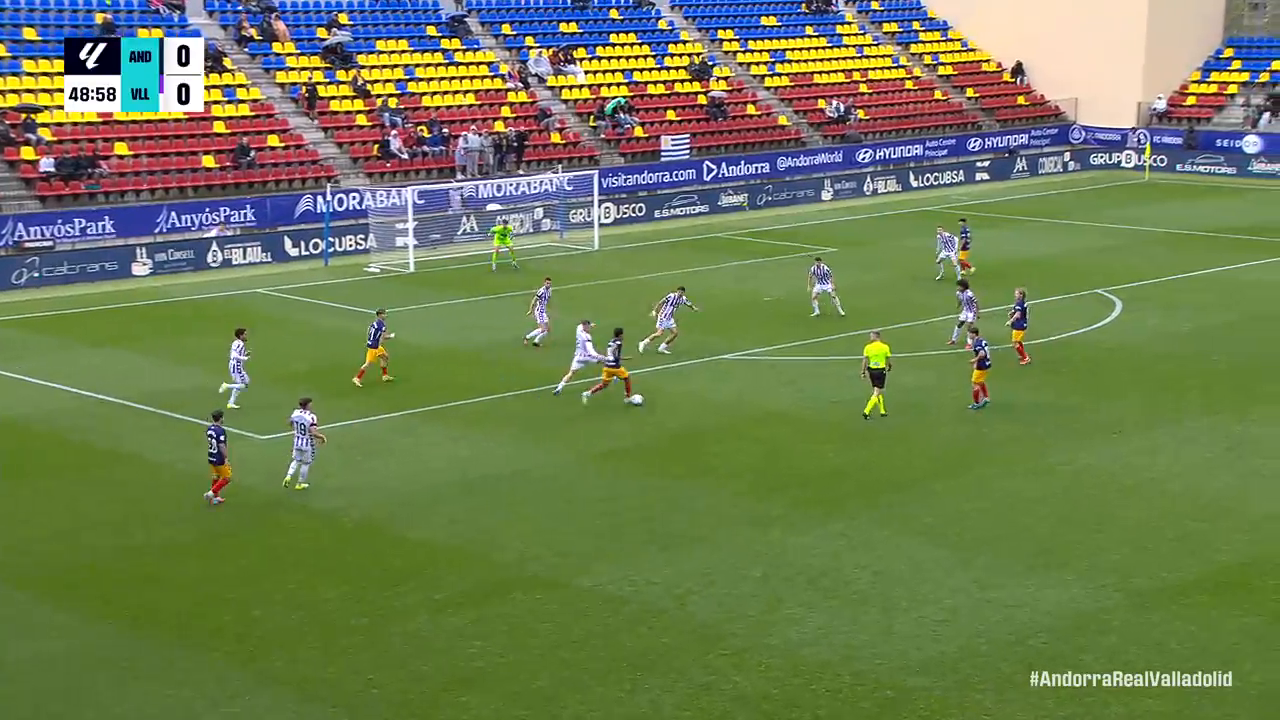
Manso has rotated strikers and has also utilized false-nines to create the movement and interchanges he needs from the nine-space. Last season, when he played more regularly with a false-nine, he would have issues with the nine-space being evacuated and attacking moves stalling. In the situation above, the winger has cut inside, the nine is waiting for the pass in the half-space while the ball-far winger is not making a run into the nine-space. The winger is unable to play a slide-rule pass into that zone for a shooting situation and must play the ball, wider or backwards or continue carrying the ball.
Manso has for the most part remedied this issue by utilizing a more natural striker in most games so the nine-space is occupied but there are situations where the nine-space will still be left vacant in some situations, due to the nine having to drop deep to receive possession or move out wide. The nine-space will then be left vacant which forces them to play passes in front of the opposition defence and lose possession. It is arguable whether Manso has the perfect nine for his system with all the movements that he needs to get into high quality shooting areas.
Counter-Pressing
Manso’ side are very aggressive in the counter-pressing phase, after turnovers in the opposition half, the players around the ball, will immediately look to coalesce around the opposition player as the goal is to win possession and force a turnover as soon as possible. In the wide areas, they will be very aggressive about applying pressure in the box, directly as if the opposition manage to shift the ball to the opposite flank, Andorra will shift to their man-orientated press as they rarely drop back to defend in a counter-pressing situation. Andorra risk counterattacks for the reward of winning possession closer to the opposition goal. They will even counter-press, immediately once they lose possession in the opposition box as they will look to apply pressure with numbers.
One of the more interesting things about Andorra’s counter-press is the second phase as if the opposition bypass the first phase of the counter-press, Manso’s side do not retreat, they will push the centre-backs higher to force a turnover in the opposition half while their fullbacks will also be tasked with tucking inside to win possession in the opposition half and in central midfield positions. In situations where they do concede counterattacks, the players cover for each other in chasing back to the own goal as the nearest player, directly engaging the opposition player in possession and looking to force a turnover. The goalkeeper will also be aggressive in leaving his goal-line to sweep up.
Pressing
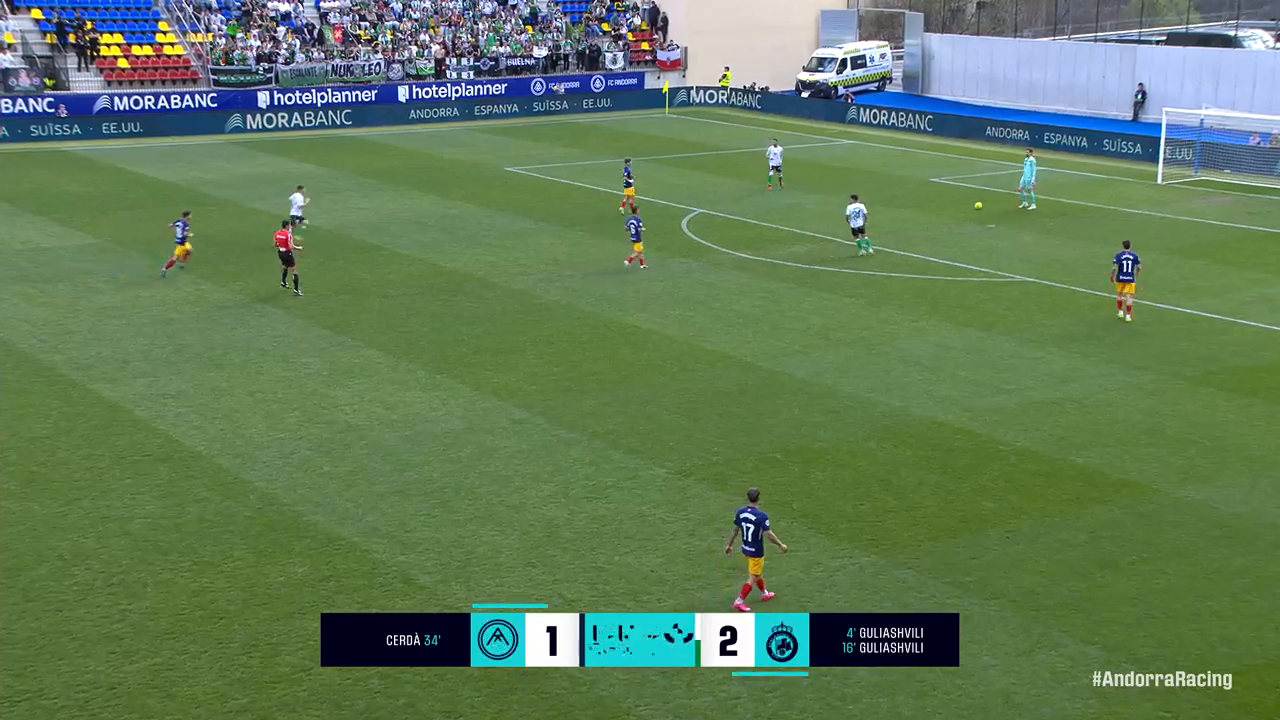
Andorra employ an aggressive man-orientated press to win possession close to the opposition goal as they utilize man-marking responsibilities all over the pitch. The situation in the picture above is from an opposition goal-kick when they start the press as Andorra are positioned outside the opposition box. If the ball is played to one of the centre-backs in the box, Manso’s side will move to press in an aggressive man-orientated fashion, looking to force a turnover or a long ball, pressing the centre-backs and fullbacks. If the ball is played back to the fullbacks, then Andorra’s ball-near striker will make a curved run towards the goalkeeper to deny him passing access to the centre-back and force him to wait on the ball or play the ball long.
Andorra adjust and tailor their press to the opposition defensive chain as if they are playing with a back-three, Andorra will press with a front three, with a two midfielders pushing up to close down the midfielders and the fullbacks pushing high to apply pressure on the opposition wing-backs. If the opposition are utilizing a two-chain, then a midfielder will push up next to the striker to apply pressure with the wingers or fullbacks, another midfielder will push up to apply pressure on the deepest-lying midfielder. They are aggressive about pushing their defensive lines high to defend in 1v1s in isolation, their fullbacks will push high to join the press which means their centre-backs will have to defend their man, cover open space in the channel and push forward to win interceptions and aerial duels. The centre-backs will also be tasked with pushing up high to track markers in the opposition half, win possession in the opposition half and recycle the ball into attacking situations.
Andorra are persistent with their man-orientated press as it allows them to cover for each other as the opposition adapt with movement and interchange. If the opposition shift the ball to the centre-back and the fullback pushes up and the winger drops deep, the winger will track his fullback forward, the midfielder will shift to the wide areas with the other midfielder and the fullback will push up high and Manso’s side will maintain a high press until they win a turnover. After they win possession in the press, they will utilize quick one-touch combinations and runs off the ball, especially in the wide areas to create goalscoring opportunities.
In the defensive phase, they utilize back-passes as pressing triggers, at which point, they will push up in a block and immediately shift to their man-marking responsibilities, looking to force the ball back to the opposition goalkeeper who will play the ball long where the centre-backs can regain possession and start an attack near the halfway line. They can press in a diamond with a winger moving next to the striker, the midfielder pushing up into the ten space while the fullback will push up with ball-near midfielder tucking in to cover or the midfielder pushing up, allowing, the fullback to stay deep, depending on which of their man-marking responsibilities dropped deep to receive possession.
Defensive Shape and Issues
Andorra’s defensive framework is developing as Manso gains more experience as a coach as it is a work in progress. This is where Andorra’s shoestring budget applies as their defensive mentality is aggressive, pushing high, leaving space in behind and giving players 1v1 responsibilities in isolation. At the beginning of the season, Andorra’s deep block was about forcing sideways passes, applying constant pressure on the ball to force the team to play backwards and eventually shift to their high press.
Andorra alternate between a 4-1-4-1 defensive shape and a 5-4-1 low block where they apply pressure on the ball, shift wide with the ball-near winger, fullback and midfielder covering the space to prevent crosses into the box and force turnovers. The deepest-lying midfielder will drop in between the centre-backs, allowing the centre-backs to shift to cover the wide areas, providing more support while also helping his team to defend crosses. Once the ball is played backwards, the deepest-lying midfielder will then move back into the six-space, they will have their striker lead the pressure phase with 1 player in the first line. The midfielders will be tasked with covering the central spaces zonally, shifting over to cover passes into these areas while also man-marking opposition midfielders who move into this area.
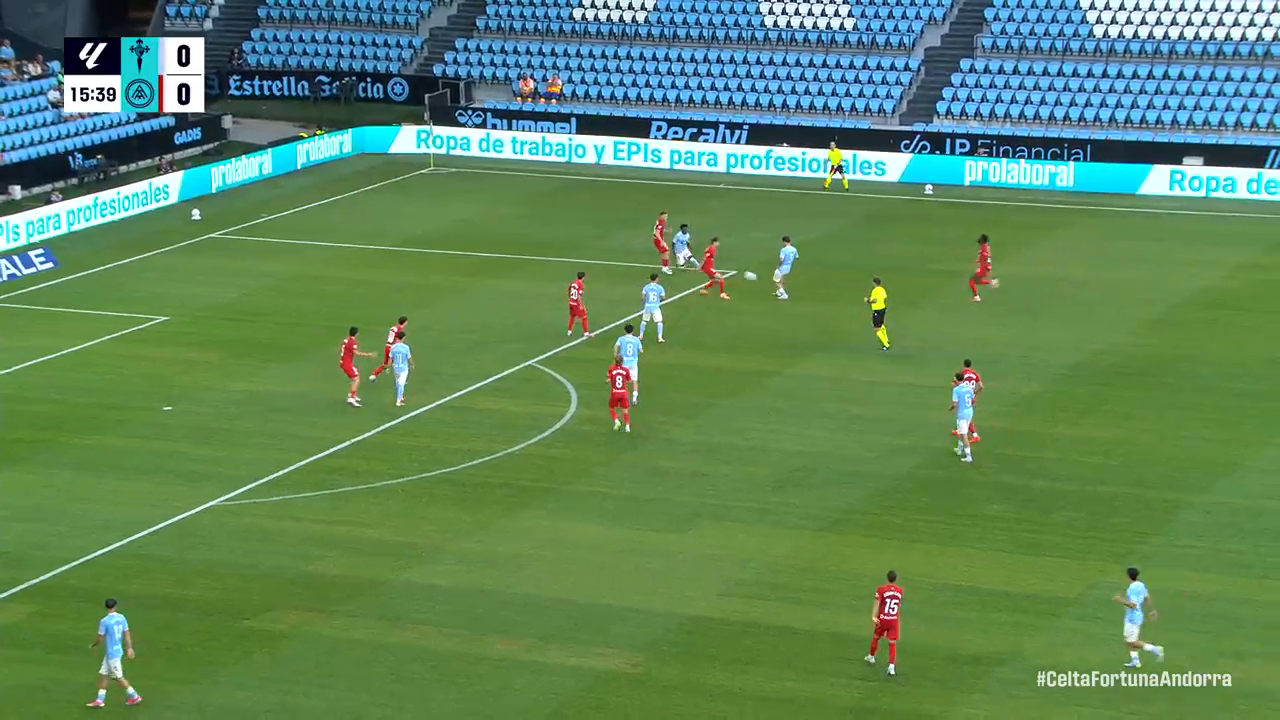
Since last season, Andorra have struggled with passes into the channels, especially the space in between the centre-back and fullback. When they shift to their high press, the fullback will push forward to apply pressure, forcing the centre-back to defend the channel and a man. These issues are about personnel as much as tactics as Andorra operate with a smaller defence than usual in modern day defence as once the pass is played into the channel, the centre-back struggles to cover the area due to lack of size and pace, the fullback struggles to recover and the whole defence is disoriented. Manso’s side concede a lot of goals and high-quality chances from these situations as the winger can dribble into a shooting situation or a low cross is played into the box. With the low crosses, once the players on the near side are beaten, the rest of the defence lack the requisite strength to recover the situation.
In the picture above, the opposition are playing the ball into the channel as the defence have shifted to defend one-side. They will play a pass into the channel, the fullback is caught on the wrong side of the run and does not have the requisite pace or strength to recover, the defender then shifts over while the whole defence is vulnerable. Especially in situations where they are trying to transition from a pressing situation into a defensive situation, Andorra struggle with defending the pass into the channel with space in behind as they need fullbacks with the pace and physicality to recover and centre-backs who are more comfortable in covering the wide areas, defending in isolation in the wide areas and in the box to block crosses and shots. Once the ball gets played into the channels, the ball-far defender is left in isolation with the striker who makes a near post run to finish a low cross.
Another aspect of their defensive structure that represents a weakness is their defender’s ability in 1v1s as Andorra’s defenders lose an inordinate amount of 1v1s. They lose 1v1s when the fullback is pressed up high against his man, loses his 1v1 which results in a counter and the centre-back struggling to cover. Even with Manso’s high man-orientated system, players are tasked with covering for each other, centre-backs and fullbacks struggle with defending 1v1s with passes into the channels or the half-space, even long passes which force defenders to run towards their own goal. This aspect of the game is definitely more about personnel rather than Manso’s tactical demands as the club need to improve the physical profile of their defence.
A good defense to emulate Cesc Fabregas’ Como as they play a similar style to Andorra and have good strategies to defend the channels. Firstly, the club have invested in physical ball-playing defenders which is integral in covering the wide areas. Their centre-backs are comfortable in defending passes into the channels, while also winning 1v1s as they can also stretch their legs to make interceptions on passes into the space in between them and their fullbacks. When a direct pass is played into the channels, the centre-back will shift over to defend the space while the fullback will tuck into the centre-back zone to give the centre-back cover. With passes into the channels, the centre-backs are also comfortable in interchanging positions, to win the 1v1 duel in the wide areas while also providing cover for the cross into the box.
Playing more physical and athletic centre-backs will allow Andorra to adapt better with passes into the channel as they can use their stride to recover and block crosses into the box. Support from the midfield and wingers can also help with closing crosses into the box. Fabregas’ side still struggle with passes into the channels but markedly less than Andorra. Manso has tried to remedy this issue in recent games by utilizing more men to cover the space in the channels and some of the strategies and switching to a back five. However, switching to a back five will limit some of their ability in attack as one of the best attacking forces in the league. The issues in 1v1 still persist as this shows that this is a personnel issue that needs to be resolved in the next transfer market.
Conclusion
Manso is on his way to becoming one of the better up and coming coaches in Spain with his courageous attacking style as the analytics back up his managerial potential. Andorra lead the league in expected goals while they aren’t bottom of the league in expected goals, conceding 15 goals on 9.81 expected goals allowed. This is the biggest difference in expected goals allowed and conceded goals in the Segunda Liga as this shows luck has been a factor with Andorra only winning 2 games this season. They lead the league in ball possession and passes per defensive action as they are 16th in the table but should improve as the season goes on. If they can remedy their personnel issues in January, they could be a factor in the promotion race this season. They are 16th in the league while leading the Segunda Division in expected points.