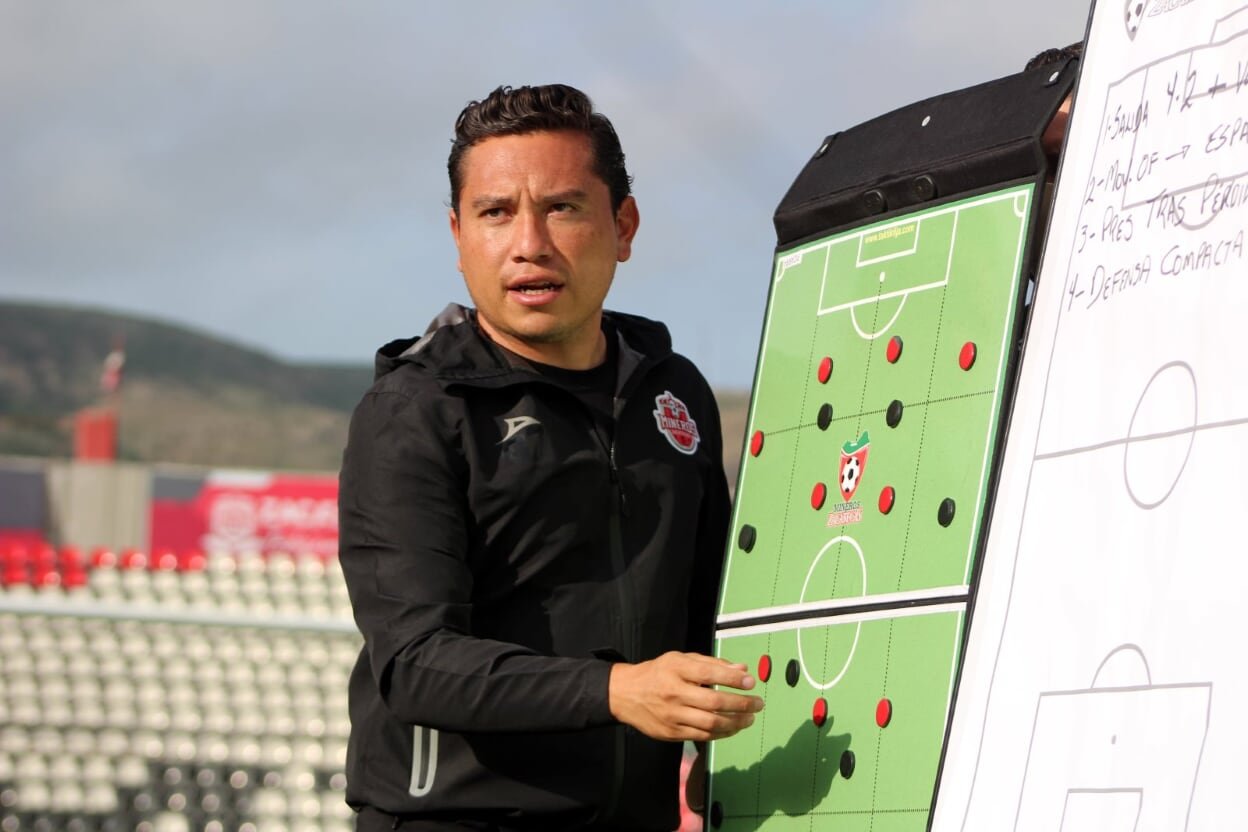
Interview with Diego Flores
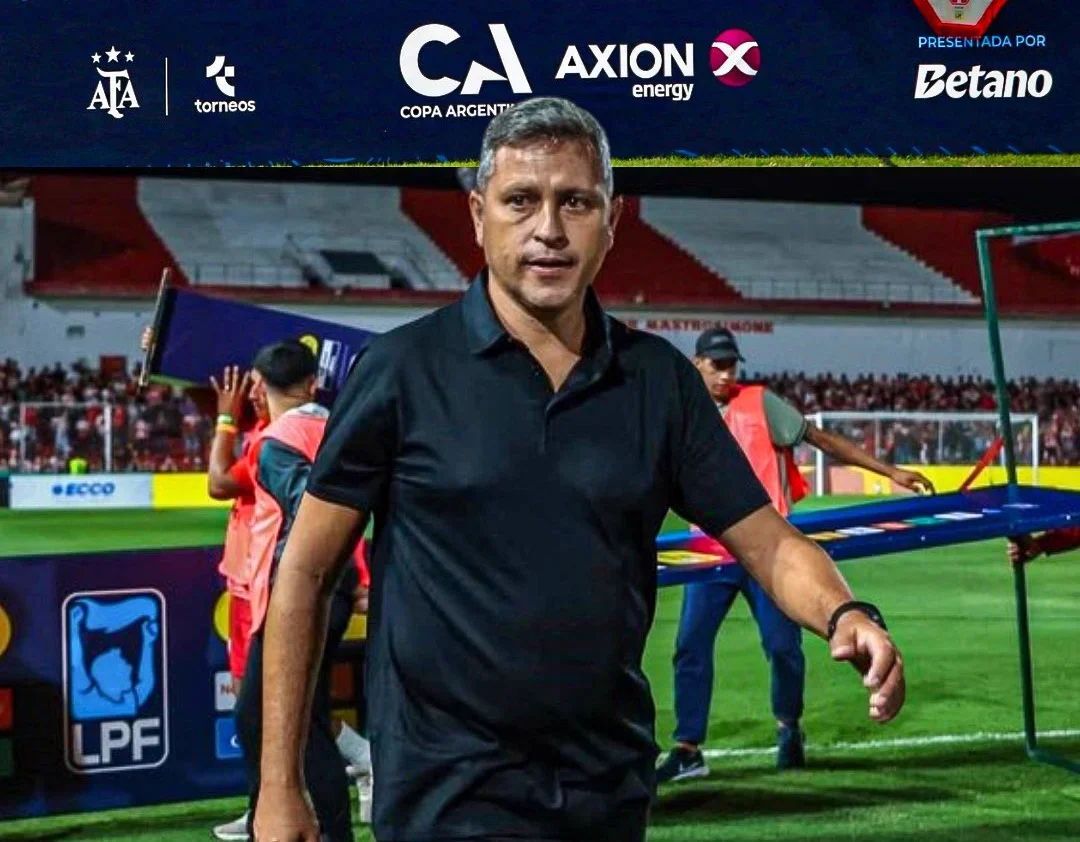
Four years ago, we wrote an article on Diego Flores as a young manager to watch as this analysis has proven true. He now leads Zone A in the Argentine Primera Division Clausura Phase with Instituto, qualifying for South American continental football as his team is 7th in expected goals, has conceded the lowest expected goals and is third in expected points on the year, beneath River Plate and Boca Juniors on a shoestring budget. We sat down for an interview to cover his journey, his approach to player development, his adaptation from a back four to a back five and his experiences in management.
How did your journey lead you to Dublin?
I studied to be a P.E. Teacher and worked at my school in Cordoba where I grew up , teaching P.E. as I didn’t want to be a P.E. Teacher, I didn’t want to be a professor in college so from there I started to learn everything to become a professional coach. One of the strategies was to learn two or three languages so I started at that moment to learn French and English. The story finished when I was in Dublin because I went to Dublin to study English. Before Dublin, I used to play until 30-years-old but from 30 till 33 or 32, I used to coach one Under 16, one Under 18 and one team in the local league, here in Argentina. In Dublin, I coached an Under 18 team. After that process, when I worked with the boys and did the CONMEBOL, here in Argentina, I met Marcelo [Bielsa]. It was a big process, 10 years of preparation and in the middle of the preparation was Dublin.
With Marcelo [Bielsa], what was the most important thing that you’ve taken from that experience?
I think, being a professional, because I wasn’t a professional player and I had never been in a professional team as a coach. But I had three degrees, I understood the country. I try to analyze games and know about football, life and leadership but I didn’t have at that moment, a professional side. How to act, how to train in a professional team. Marcelo taught me this, how to train a team, intensity, the rhythm of a pass, the treatment of the players when they are injured. A lot of things that when you don’t know at the amateur level.
How did this experience prepare you for the experience in Argentina?
I think it was key in my career. First of all, because of the ‘human touch’, how Marcelo touched me on the human side. There is a way as a coach in which you have to behave in football, it is not the same way you work outside football as inside football. In football, you have to be quiet, respectful, try to see more than you talk, reason and not give your opinion freely. I think all these values were shared from Marcelo with me. This was very important for me. After you have the football touch, how you have to train a team. Both things, human and training aspect, he shaped me, 100%.
With the situation at Godoy Cruz, the statistics had you ranked very high (5th in expected goals, 4th in touches in the penalty area) but the results may not have been there. How does a manager work when the process is working when the results aren’t really there?
I think the first experience from Godoy Cruz were very emotional because we put a team for the first time in history, in the National Semi-final and the whole city was surprised with the performance. But, it’s true that the result was, I don’t remember, 45% of points and of course I was a new coach, I used to take a lot of risks in attack, my team was very offensive but I used to concede a lot of goals. I think after you experience those situations, you start to be more balanced, you start to develop more defensive principles to have a more balanced team in defence and attack. But, I think at times we did very well and never abandon our offensive principles, in our philosophy and in our staff, it is very important. We don’t do this profession if we don’t go into every match to win, even in some moments we have to adapt and be a bit more defensive or not but our goal is to win and to win with those offensive principles. But, after more than 100 matches, you understand that defensive balance is important to not lose the emotional construction when you are building a team.
You have taken a lot of things from Godoy Cruz to now. Especially your work with Martin Ojeda (led Argentina in Expected goals and Expected Assists), who became the top scorer for Orlando City FC. When you coach vertical runs and you put him in a lot of goalscoring positions, could you take me through the process of that because he became a more well-rounded attacker under you?
The talent in Argentina is very high, you have a human approach, you have a physical approach that here is key because it’s like the Argentinean footballer needs to understand how to become more professional. I’m talking about nutrition, I’m talking about training intensity and I’m talking about feedback after matches. I’m talking about pushing them to give 100% of themselves in his life, in his training and in his matches. I think the approach is human, physical, professional and collective. You have individual intelligence and team intelligence as I think this is a mix of all the aspects that I mentioned.
What are the parallels with what you did with Martin and now what you’re doing with Alex Luna (highest ranked non striker in Expected goals and most shots in Argentina)?
I think they are different players but same age, same background as both of them did not have success in their clubs before me. I think this is the same thing, all these process that I mentioned with them as when a player wants to grow, when a player understand that he has to growth with the team and not outside of the team, you happen to grow. Alex is a player that is very talented in attack, very aggressive in 1v1. He is able to create and score with his runs, very aggressive in attack but opposite in defence and I think he’s made great steps in defence. I think that makes him now a more complete player. In the case of Martin Ojeda, his challenge was to understand how to attack the spaces as his talent was linked with his way, with his profile of how he used to attack the spaces. Also, I convinced him that he could play on both sides, when I was in Godoy Cruz, Martin just wanted to play just on the right side. I explained to him the advantage to play on the left side. Two different situations, similar backgrounds, two talented players.
How do you go about these discussions where you’re showing a player something that they can’t see yet but you’re encouraging them to grow in a way that may not be apparent to them?
I think it is a process, the are young players, they’re used to playing with some fears because they understand that they can be their opportunity to grow, have a good contract, to make a step forward and play in a different league. 22-years-old with all these problems in their life, every week, they live a new experience, a new match, a new challenge. I think every week you have to work with them to try to understand the new situations, not just about football but about life, about values. When you coach a good person, this is easier and in both situations [Martin Ojeda and Alex Luna] they are great players so it’s much easier.
You’ve gone from playing four at the back to five at the back. You’re the best defensive team statistically in Argentina. You concede the lowest XG (7th in expected goals, lowest expected goals conceded, 3rd in expected points) , could you explain the process of adapting those tactics to this team?
It’s true, I had a few opportunities to play with a line of three or five defenders in my career. Two things happened, one when I arrived in Instituto, I considered myself and my team had the players to play with a line of five and not with a line of four players for a lot of situations. And also, in Israel, I coached Maccabi Haifa in Israel and we played in the Conference League and in one leg, we faced a Polish team (Rakow Czestochowa) who played 3-4-3 or 5-4-1. We were very surprised about the process, defensive security, the security in attack and we tried to copy this. We analyzed this team and made a big analysis about a lot of their matches and this made us think we could do this in our club. We started to work with a line of three defenders and we linked this with our principles of attack and defence, I think we did well and now the team as you said, had great numbers. We are having a great year in Argentina with one of the lowest budgets in the country.
Speak on having the lowest budget, at a time where Boca Juniors and River Plate have spent a lot of money especially on attacking players. You’ve had to develop your team and adapt your tactics in a league where there is money being spent. Even situations like Angel Di Maria returning to Rosario Central. What are the challenges of this?
It is a very tough challenge, this is the an advantage, they have have the money and great players, Di Maria [Rosario Central] , Paredes [Boca Juniors], Almada and Correa [River Plate] as European-level players, playing in this country. They advantage we have is Argentinean football is very competitive, aggressive as it is noisy to play here. Players need adaptation to a lot of things and in general, when you take a team with a low budget, you can improve the professional development in a physical way, nutritional way as there is a lot of things that you can push. After, the challenge is to make a team as when you make a team as you grow every player, you can be competitive. This takes time and you need time to develop this, sometimes in Argentina it’s not possible. You will find a lot of processes of two months, three months or four months as if you last one year here, you are a hero and in this club, the owners of the club helped us to last as the results also helped. Now, we are with twenty eight to thirty matches together, this helps to be competitive with clubs that have a big budget.
One aspect of your tactics is when you regain possession, the aspect of the first pass, passing into depth or a pass to hurt the opponent. Can you explain those situations and how you coach those situations?
There are a lot of principles in our way of playing. I believe a lot that when a team defends strongly, it’s to feel free to attack with more creativity. First of all, we need to be very aggressive tactically, we have to do what the coach expects as this will protect the team during the match. Also, when we recover the ball, we’re going to feel free to attack. After the attack, depending on the side of the pitch where we recover the ball, we can be more direct or not. We have methods of attack in the middle and on the sides, we need to regain space all the time or go back when we lose the ball. You train this with exercises, with videos and with match feedback. You have to be very repetitive; you have to repeat this tools which you have to teach the players as they are human and make mistakes. As coaches, we also make mistakes and we need those mistakes to convince ourselves that this is the way we have to follow.
Also with set-pieces, some situations, you are transition and the ball goes out for a throw-in, your team will take the throw-in very fast. Other times, your team will wait to take the throw-ins. How do you decide when to take the throw-in fast or when to slow down and allow your team to organize?
For me, you have three ways of doing throw-ins, the best way is to do it fast to surprise the opponent. After you have the intelligence, in throw in situations, one player will go and the other will come to try to move the ball from side to side. After, you have the long throw-ins. For me, those are the three types of throw-ins. The best way is to try to play fast. Of course, every one of them has structures and principles, also you have to be very careful because when you lose a throw-in, even when it’s your throw-in or the opponent’s throw-in, your team needs to reorganize to recover position quickly as this position is dangerous. You need a structure to this. Also in corners and free-kicks, you need to have a structure, you need to have a strategy because you analyze the opponent, you have principles in how and where you shoot. Also, the players that want to head the ball, have to know where to shoot and put the ball. Also, you need a strategy to cover for if you lose the header. It’s the same, it’s time, it’s matches, it’s training as you need time to perfect these situations and be excellent in those kinds of structures.
With corners, you take short corners but you also cluster your players at the top of the box to make runs into the box. From Godoy Cruz, you always worked on set-pieces. How important is this to your strategy?
I think I try to stimulate short play in free-kicks and corners. Also, I try to involve the players in the decision. They have 1 player and you have two players, you can play now. I don’t know if you watched our match against Boca Juniors, we hurt them in a corner and hurt them in a free-kick. After this, my players were playing short so I asked them ‘Why are you playing short if the opponent was suffering when we were playing direct?’ So we started playing corners and free-kicks direct so all this reasoning with the players is important, to help them understand the moment because it is an emotional sport. You try to explain when you can hurt the opponent as the emotional touch is important, you try to reason with them to explain which is the right decision.
Your team creates a lot of good shooting situations for the wingers from crosses and runs into the box but you also allow your wingers to shoot from range. How do you manage taking high quality shots but also giving your players freedom?
Through the training, we train shots and crosses and also the reasoning. I consider myself that goalkeepers usually protect the first post so every cross that is on the floor is difficult for the goalkeeper. After you train this, you need to use tools to train what is happening when the goalkeeper is in the middle of the goal. Why are you crossing the ball when there is space at the near post? I think this reasoning makes the players watch more matches and more situations to help them in their decision making. Crosses, shots, corners and free-kicks are inside our training as every time we can do it more, I consider it important because a lot of time the football is playing more in the tactic than in the technique.
You have a different challenge now from your previous job in keeping people motivated with success. How do you not let your team get complacent?
Values. From the first day, the human values, training values and professional values, I think we have built this, we need to control this and we need to be very aware that we don’t lose our way.
You speak about values, you’ve worked with teams in England, in Israel and in Argentina, how do you take the time to understand and adapt culturally to the values of your team and different players?
When I did the comparison between Godoy Cruz and now, I think it was 5 years of difference. But in those 5 years, with my family, I am a bit more in order, I am still a young guy, I like to reason about life and I like to reason about my career. I am very engaged with a lot of commitment to live my life with passion as I try to transmit this to my players. Because players are the principle reason that I chose this career. Every time, I help a player to grow, with Godoy Cruz we sold five players to foreign countries, in Israel, I used a player who was 20-years-old (Lisav Eissat) who was sold to Bristol City in England. It was historic as when something like this happens, it reminds me why I chose this profession as the principle that made me chose this profession is to help people. But those people are players. Now we make the supporters happy, because it’s amazing what we’re living now in our city. I was born in Cordoba where I am coaching now, for the first time in my career. I’m living an amazing year in this sense. I think I try to help the team live this life, this profession, with passion because when you convince them to live life like this, everything is better for them.
After being away for so long and moving around, how does it feel to have success with a team in your hometown?
Imagine, I can see my mother once or twice in a week. In France, England or Israel, it was once or twice a year. My son is 5-years-old, is studying in the school I used to study in, with the teacher that used to be in my college, so he is very protected in a school that is my second family. I live this experience with my brother, with my agent, with my friends, all of them in my city while achieving historical results. It is amazing, it’s a gift from god for me.
How does it feel to study in school as a P.E. Teacher to go to the league and lead the league phase? How does this feel emotionally?
It’s amazing as I used to have a dream to be a professional coach and to have a great family. After working and preparing for a long term, having experience in different countries, working in different things, in school and in the process of preparing myself to be a coach. After years of living different steps, different experiences like when I met Marcelo Bielsa, experience in Ireland, France, Israel, a lot of things happens in my life that is surprising, crazy. In the last years, I met my wife, this wonderful person that completes me and gave me two boys that complete my life. Now, I just say thanks to God, because something happens in my life that for me is a little bit crazy.